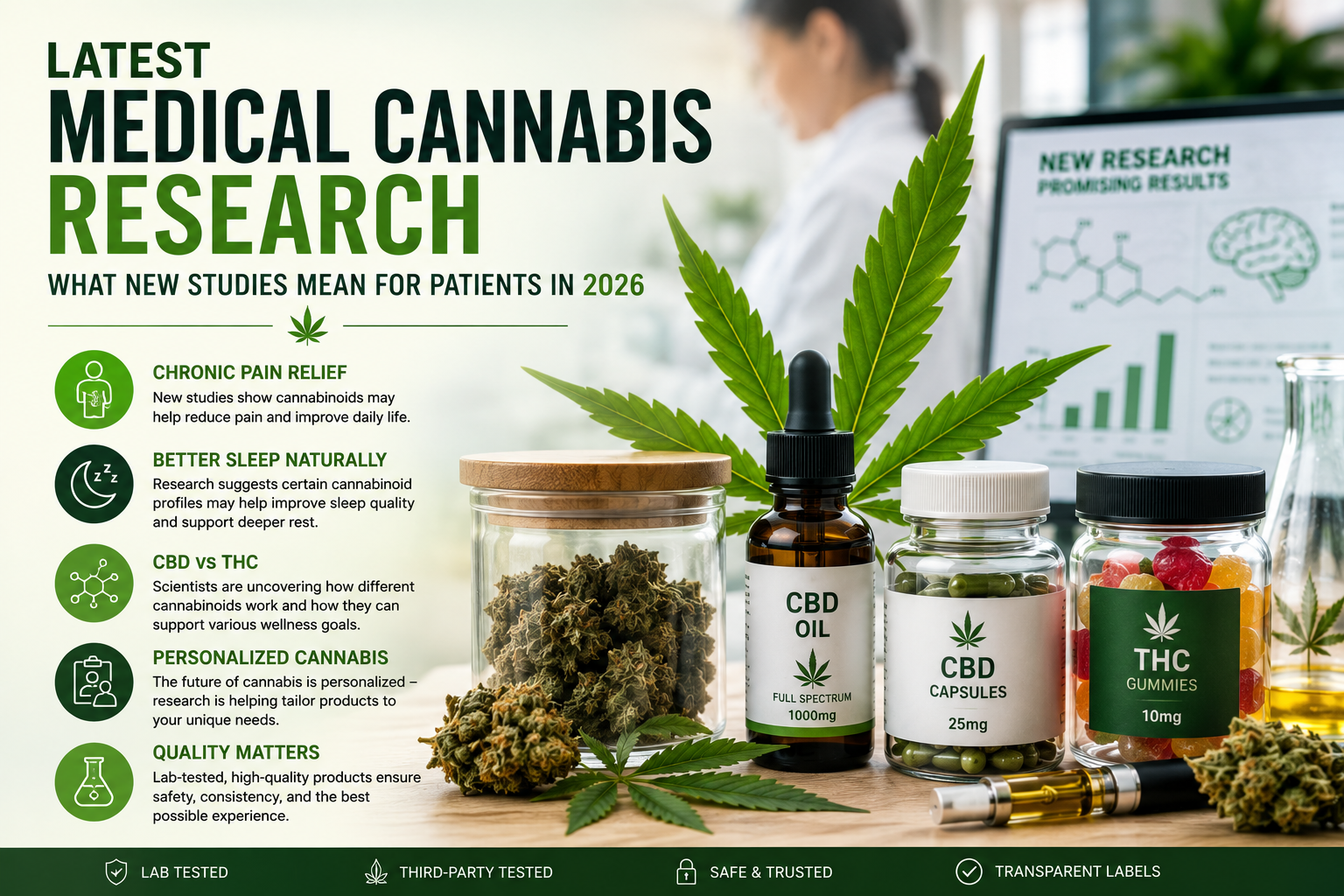
Medical cannabis research is advancing every year, giving patients and healthcare providers a better understanding of how cannabis may support overall wellness and symptom management. In 2026, researchers continue to explore how cannabinoids like CBD and THC may help improve quality of life for people living with chronic pain, sleep disorders, anxiety, inflammation, and other health conditions. While every person’s experience is different and more research is still underway, these new studies are helping shape the future of cannabis-based healthcare. Here’s a look at some of the most promising developments and what they could mean for medical cannabis users. 1. New Research on Chronic Pain Relief Chronic pain remains one of the most common reasons people seek medical cannabis. Recent studies continue to investigate how cannabinoids interact with the body’s endocannabinoid system, which helps regulate pain perception. Researchers are exploring whether cannabis may help support individuals living with: While cannabis isn’t a cure, many patients report improved comfort and reduced reliance on traditional pain medications when using cannabis under medical supervision. 2. Better Sleep Without Feeling Groggy Sleep issues affect millions of people, and researchers are studying how certain cannabis products may help improve sleep quality. Current research is investigating whether carefully selected cannabinoid profiles may help users: Because different strains and cannabinoid ratios can produce different effects, patients are encouraged to work with knowledgeable healthcare providers when choosing products. 3. Understanding CBD vs. THC One area of research receiving significant attention is how different cannabinoids work together. CBD is commonly chosen by users seeking relaxation without intoxication, while THC is often used for symptom relief but can produce psychoactive effects. Researchers are also studying the “entourage effect”—the idea that cannabinoids and naturally occurring compounds called terpenes may work together to influence a product’s overall effects. 4. Personalized Cannabis Is the Future Researchers are moving toward more personalized cannabis recommendations based on factors such as: This approach may help patients find products that better suit their individual needs rather than relying on a one-size-fits-all recommendation. 5. Product Quality Matters More Than Ever Recent research also emphasizes the importance of purchasing products from reputable, licensed retailers. When shopping for cannabis, look for: High-quality products provide a more consistent experience and help users make informed choices. Tips for Medical Cannabis Users To get the most from your cannabis experience: Frequently Asked Questions Does new research prove cannabis works for everyone?No. Responses vary from person to person, and researchers continue studying which conditions and products benefit different individuals. Should I choose CBD or THC?It depends on your goals, tolerance, and advice from a healthcare professional. Some patients benefit from CBD-dominant products, while others may find balanced THC/CBD formulations more suitable. Why should I buy lab-tested products?Lab testing helps verify cannabinoid content and screens for contaminants, giving you greater confidence in product quality and consistency. Conclusion Medical cannabis research continues to provide valuable insights that help patients make better-informed decisions. While scientists are still exploring many potential therapeutic uses, today’s findings are leading to safer products, better quality standards, and more personalized treatment approaches. Whether you’re new to medical cannabis or an experienced user, staying informed about the latest research can help you choose products with greater confidence and use them responsibly.
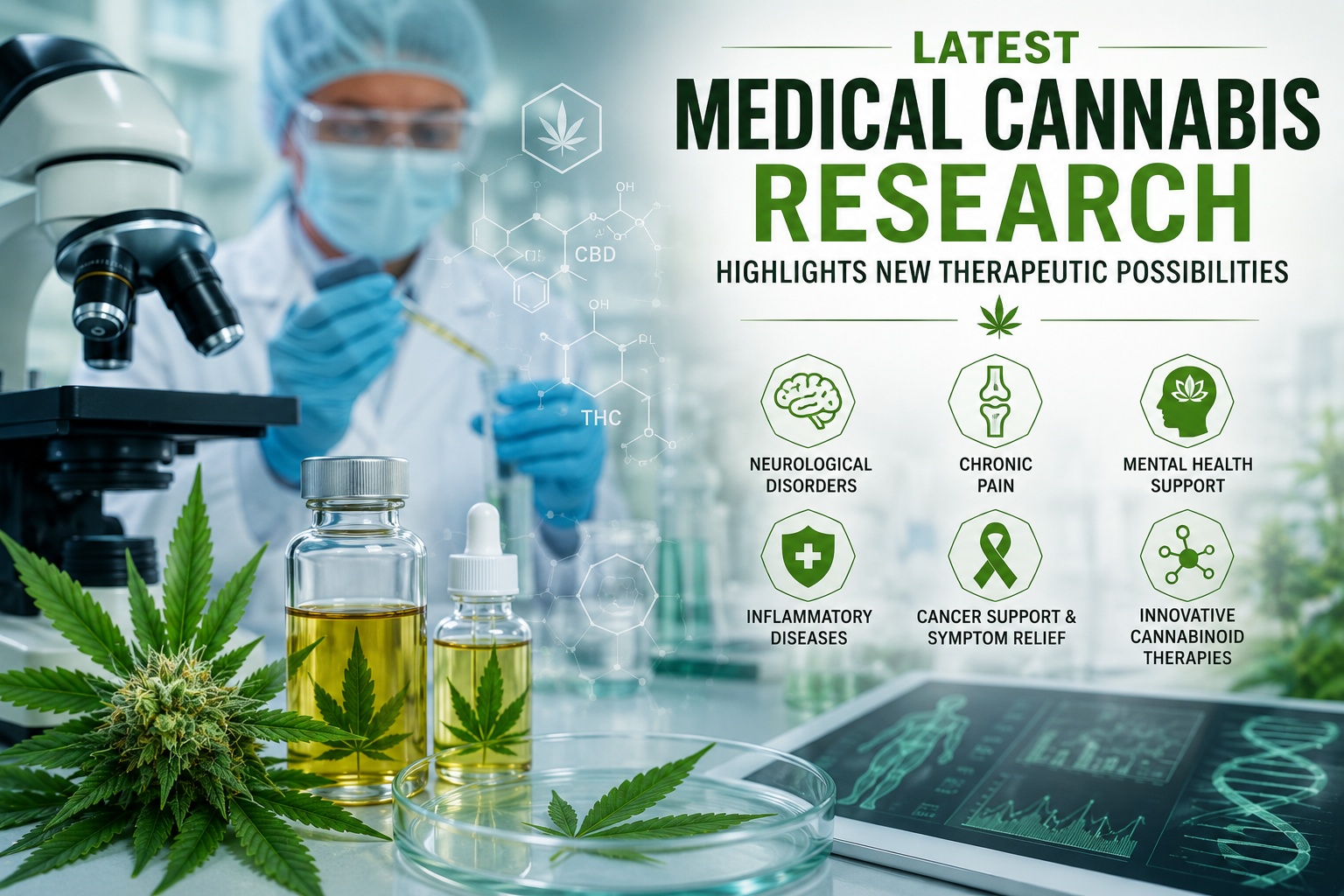
Latest Medical Cannabis Research Highlights New Therapeutic Possibilities
Medical cannabis research continues to evolve rapidly as scientists, healthcare providers, and regulatory agencies work together to better understand the therapeutic potential of cannabinoids. Throughout 2026, researchers have published new findings exploring how cannabis-based medicines may support patients with chronic illnesses, neurological disorders, inflammatory diseases, and cancer-related symptoms. Although researchers caution that more large-scale clinical trials are needed before expanding medical recommendations, recent studies continue to strengthen the scientific foundation supporting specific medical cannabis treatments. As governments increase funding for cannabinoid research and pharmaceutical companies invest in cannabis-derived medicines, the future of evidence-based cannabis therapy appears increasingly promising. Why Medical Cannabis Research Is Growing Over the past decade, many countries have expanded legal access to medical cannabis while simultaneously increasing investment in scientific research. Several factors are driving this growth: Researchers today have access to advanced analytical tools that allow them to study cannabinoids with greater precision than ever before. Understanding Cannabinoids Cannabis contains more than 100 naturally occurring cannabinoids, although the two most studied remain: Cannabidiol (CBD) CBD is non-intoxicating and has been extensively researched for its potential role in: Researchers continue investigating additional therapeutic applications while emphasizing that effectiveness varies depending on the condition being treated. Tetrahydrocannabinol (THC) THC is the primary psychoactive compound found in cannabis. Medical researchers continue studying its potential role in helping manage: Because THC can produce psychoactive effects, healthcare providers carefully consider dosage, formulation, and patient history before recommending THC-containing medicines. Chronic Pain Remains a Major Research Focus Chronic pain affects millions of people worldwide and remains one of the most common reasons patients seek medical cannabis treatment. Current research is exploring whether cannabis-based medicines may reduce pain associated with: Several recent clinical reviews suggest that some patients experience meaningful symptom relief, particularly when conventional treatments have proven insufficient. However, researchers continue to call for larger, long-term studies to better understand effectiveness and safety across different patient populations. Neurological Disorders Show Encouraging Progress Neurological diseases remain one of the most promising areas of cannabinoid research. Scientists continue investigating cannabis-derived medicines for conditions such as: Multiple Sclerosis Some cannabis-based medications have demonstrated benefits in reducing muscle spasticity associated with multiple sclerosis. Researchers are now studying whether cannabinoids may provide additional symptom relief while improving overall quality of life. Epilepsy CBD-based medicines have already demonstrated effectiveness for certain rare forms of epilepsy. Current research focuses on: The success of CBD treatments has encouraged additional research into other cannabinoid compounds. Parkinson’s Disease Early-stage studies continue exploring whether cannabinoids may help address symptoms including: Researchers stress that evidence remains preliminary and larger clinical trials are necessary before drawing definitive conclusions. Mental Health Research Continues Mental health remains one of the most actively researched—but also most carefully approached—areas of cannabis science. Investigators are studying potential roles for cannabinoids in managing: However, scientists caution that cannabis may not be appropriate for everyone. THC, in particular, may worsen symptoms in some individuals or increase the risk of adverse psychiatric effects, especially at high doses or in vulnerable populations. Healthcare professionals recommend that patients seek medical guidance rather than self-medicating with cannabis products. Cancer Supportive Care Medical cannabis is increasingly being studied as part of supportive care for cancer patients. Current research focuses on symptom management, including: Researchers are also investigating whether cannabinoids may have anti-tumor properties in laboratory settings. While early findings are scientifically interesting, there is currently insufficient clinical evidence to conclude that cannabis can treat or cure cancer. Patients should always discuss cannabis use with their oncology team to ensure safe and coordinated care. Inflammatory Diseases Under Investigation Inflammation plays a role in many chronic illnesses, making it another important focus of cannabinoid research. Scientists are investigating potential applications for conditions including: Preclinical studies have shown that cannabinoids may influence inflammatory pathways, but additional human clinical trials are needed to confirm their therapeutic value. Precision Medicine and Personalized Treatment One of the most exciting developments in cannabis research is the move toward personalized medicine. Researchers are exploring how factors such as genetics, metabolism, age, and underlying health conditions may influence an individual’s response to cannabinoid therapies. Future treatment plans may involve: This personalized approach could improve treatment outcomes while minimizing side effects. Pharmaceutical Innovation Pharmaceutical companies continue developing cannabis-derived medicines that meet strict quality and safety standards. Current areas of innovation include: These products provide more consistent dosing than many traditional cannabis products and are designed to meet regulatory requirements for medical use. Challenges Facing Medical Cannabis Research Despite significant progress, researchers continue facing several obstacles. These include: Addressing these challenges will be essential to generating the high-quality evidence needed to guide future medical practice. What the Future Holds Experts expect medical cannabis research to continue expanding over the coming years. Future studies are likely to focus on: Artificial intelligence, genomics, and precision medicine may also accelerate the discovery of new therapeutic applications. As evidence continues to grow, healthcare providers will be better equipped to determine when cannabis-based medicines are appropriate and how they can be safely integrated into patient care. Key Takeaways Frequently Asked Questions What is the latest medical cannabis research focused on? Current research explores chronic pain, epilepsy, multiple sclerosis, inflammatory diseases, supportive cancer care, mental health conditions, and personalized cannabinoid therapies. Is medical cannabis scientifically proven? Some cannabis-based medicines have strong evidence for specific conditions, such as certain rare seizure disorders and symptom management in multiple sclerosis. Many other applications remain under active investigation. Can cannabis cure diseases? No. Current evidence does not support claims that cannabis cures diseases. Research primarily focuses on symptom management and improving quality of life, while many potential therapeutic uses require further clinical validation. Why are clinical trials important? Clinical trials help researchers determine whether treatments are safe, effective, and appropriate for specific patient populations. They provide the evidence needed for healthcare professionals to make informed treatment decisions. Conclusion Medical cannabis research is advancing at an unprecedented pace, offering new insights into how cannabinoids may support patients with a variety of health conditions. While certain cannabis-based medicines have
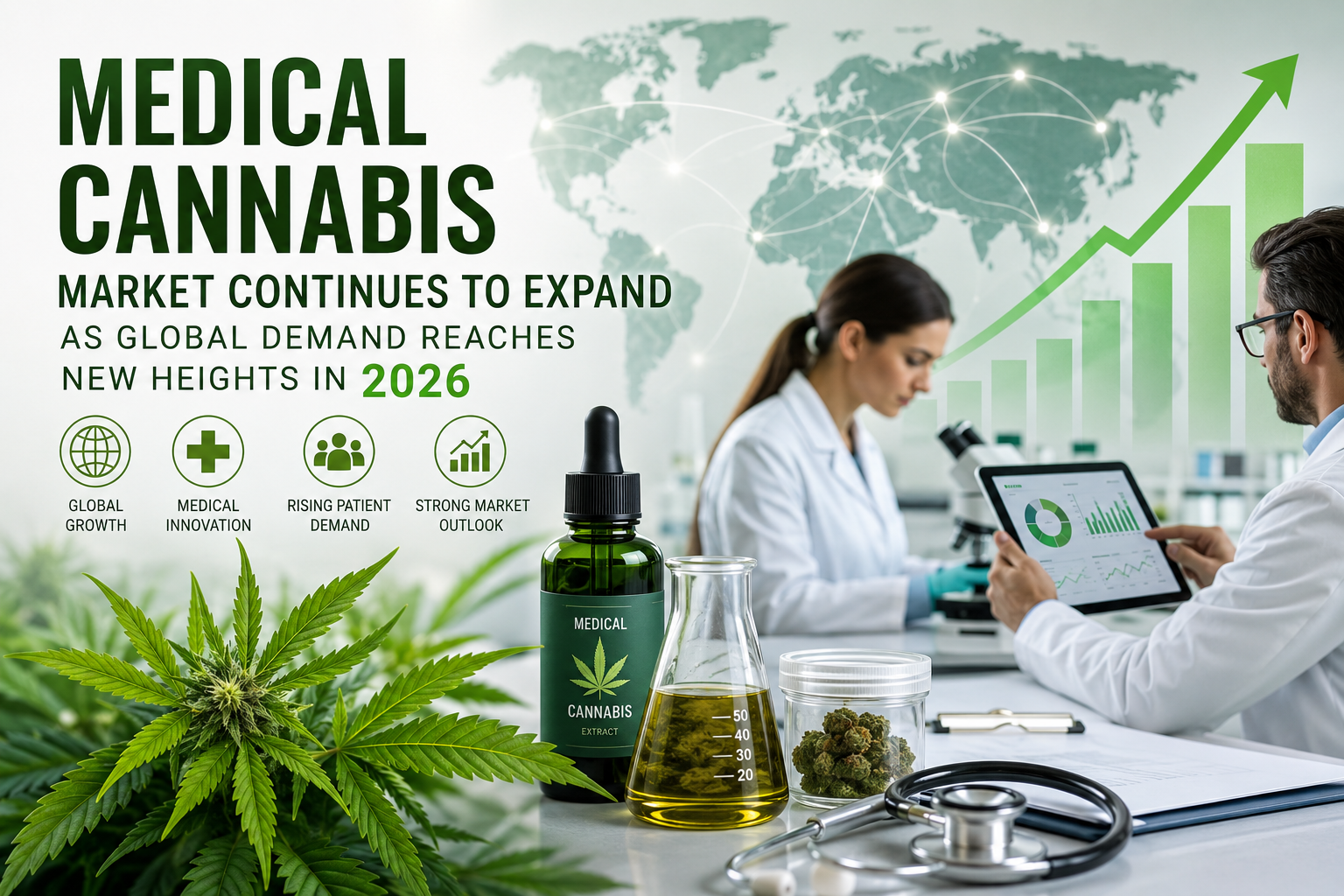
Medical Cannabis Market Continues to Expand as Global Demand Reaches New Heights in 2026
The global medical cannabis industry is entering another year of remarkable growth. Across North America, Europe, Australia, and several emerging international markets, healthcare providers, regulators, researchers, and patients are increasingly embracing cannabis-based medicine as part of modern healthcare. Driven by expanding legalization, stronger clinical research, technological innovation, and rising patient awareness, the medical cannabis sector continues to mature from a niche industry into a significant component of the global healthcare market. Industry analysts expect continued momentum throughout 2026 as governments refine regulations, healthcare professionals gain additional education, and pharmaceutical-grade cannabis products become more widely available. Growing Patient Demand Fuels Market Expansion One of the largest drivers behind market growth is the increasing number of patients seeking alternative treatment options for chronic medical conditions. Medical cannabis is commonly prescribed or studied for conditions such as: As awareness grows, more patients are discussing cannabinoid-based therapies with healthcare providers, particularly when conventional treatments have not delivered satisfactory results. Healthcare professionals are also gaining access to improved educational resources designed to support evidence-based prescribing and patient care. International Markets Continue to Grow While North America remains a major player, international markets are becoming increasingly important. European countries continue expanding medical cannabis access through regulated healthcare systems, creating new opportunities for licensed producers and pharmaceutical manufacturers. Germany remains one of Europe’s largest medical cannabis markets, while countries including Poland, the United Kingdom, Australia, and New Zealand continue investing in patient access and regulated supply chains. Industry reports also project continued expansion across Europe as demand increases. Research and Clinical Studies Build Confidence Scientific research remains one of the industry’s strongest growth drivers. Universities, hospitals, and pharmaceutical companies continue conducting clinical trials to better understand how cannabinoids interact with the human body. Current research is exploring cannabis-based therapies for: While many studies remain ongoing, researchers emphasize that continued clinical evidence is essential before expanding treatment recommendations for additional medical conditions. Healthcare professionals continue encouraging patients to use medical cannabis only under appropriate medical supervision. Regulatory Progress Improves Patient Access Regulatory developments remain one of the most significant catalysts for industry growth. Several jurisdictions introduced updates in 2026 aimed at improving patient access while maintaining strict quality and safety standards. For example, Georgia significantly expanded its medical cannabis program by allowing more qualifying conditions, stronger medical cannabis products, and authorizing hundreds of independent pharmacies to dispense approved products. Meanwhile, broader regulatory reforms continue to reshape the global industry by encouraging investment, supporting research, and creating clearer pathways for licensed businesses. Technology Is Modernizing Medical Cannabis Technology is transforming nearly every stage of medical cannabis production. Licensed producers now rely on: These innovations help improve product consistency, reduce contamination risks, and maintain compliance with increasingly strict regulatory standards. Healthcare providers also benefit from digital prescribing systems and telemedicine platforms that make patient consultations more accessible in regions where regulations permit. Investment Continues Despite Market Challenges Although some cannabis companies continue facing pricing pressure and regulatory complexity, many established medical cannabis businesses reported stronger financial performance during 2026. Several international producers have focused on expanding medical operations while reducing exposure to lower-margin recreational markets. Some companies also reported record medical cannabis revenue driven by strong demand in Europe and Canada. Investors increasingly view medical cannabis as a long-term healthcare sector rather than simply a consumer products industry. Challenges Still Remain Despite positive momentum, the industry continues facing several challenges. These include: Industry leaders generally agree that addressing these challenges will require collaboration between regulators, healthcare professionals, researchers, and licensed businesses. Looking Ahead The outlook for the medical cannabis industry remains positive. Growing patient acceptance, stronger scientific evidence, expanding international markets, and improving regulatory clarity continue supporting long-term growth. As governments refine healthcare policies and researchers publish additional clinical data, medical cannabis is expected to become an increasingly integrated part of modern healthcare systems around the world. While continued research remains essential, the industry’s trajectory suggests that cannabis-based medicine will play a larger role in patient care over the coming years. Frequently Asked Questions Is the medical cannabis market still growing? Yes. Industry reports and company results indicate continued growth driven by patient demand, international expansion, and ongoing research. Which countries are leading medical cannabis growth? Canada, Germany, Australia, the United Kingdom, and several other European markets continue expanding regulated medical cannabis programs. Why is research important for medical cannabis? Clinical research helps healthcare professionals better understand safety, effectiveness, dosing, and appropriate medical applications, supporting evidence-based patient care.