
End of Content.
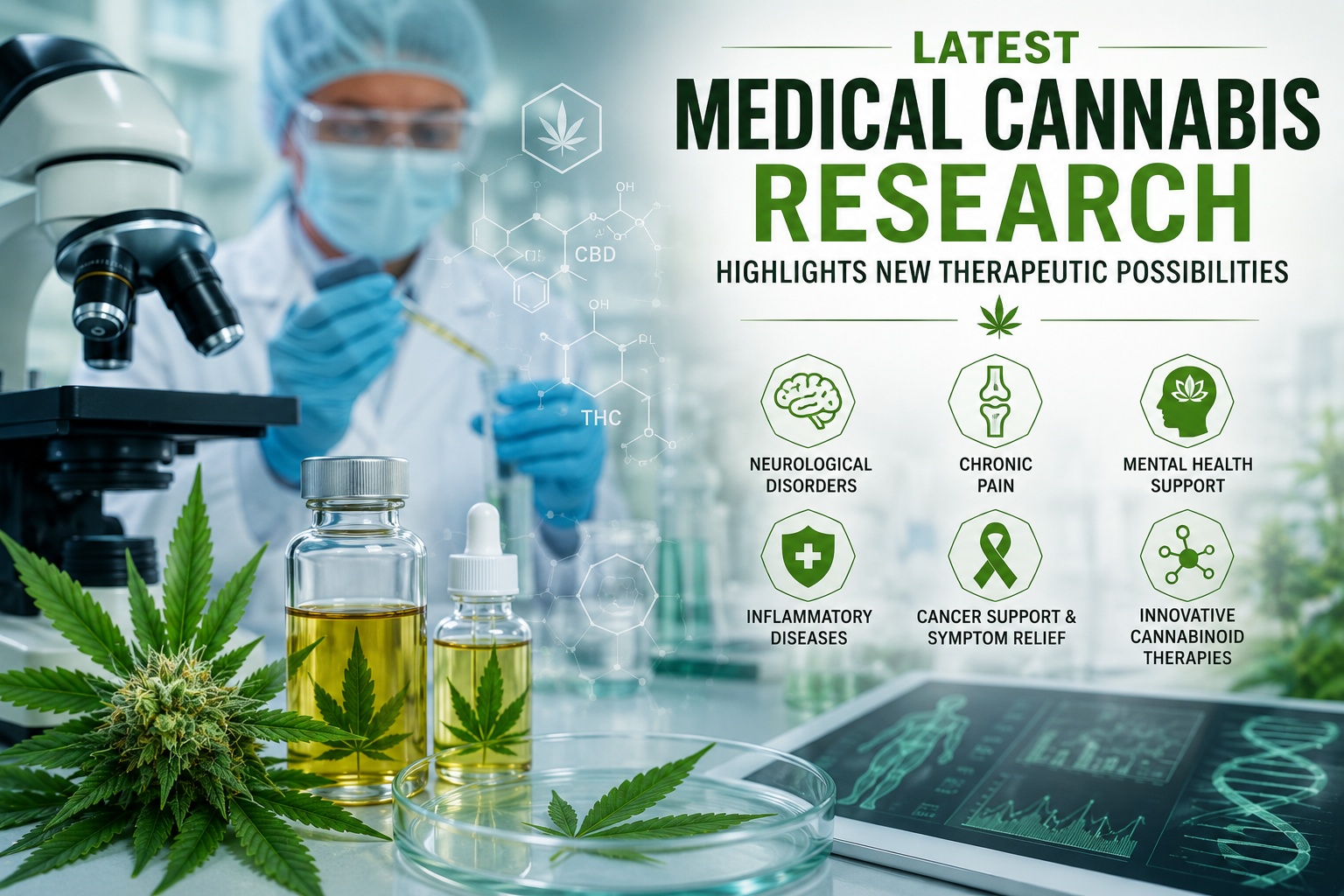
Medical cannabis research continues to evolve rapidly as scientists, healthcare providers, and regulatory agencies work together to better understand the therapeutic potential of cannabinoids. Throughout 2026, researchers have published new findings exploring how cannabis-based medicines may support patients with chronic illnesses, neurological disorders, inflammatory diseases, and cancer-related symptoms.
Although researchers caution that more large-scale clinical trials are needed before expanding medical recommendations, recent studies continue to strengthen the scientific foundation supporting specific medical cannabis treatments.
As governments increase funding for cannabinoid research and pharmaceutical companies invest in cannabis-derived medicines, the future of evidence-based cannabis therapy appears increasingly promising.
Over the past decade, many countries have expanded legal access to medical cannabis while simultaneously increasing investment in scientific research.
Several factors are driving this growth:
Researchers today have access to advanced analytical tools that allow them to study cannabinoids with greater precision than ever before.
Cannabis contains more than 100 naturally occurring cannabinoids, although the two most studied remain:
CBD is non-intoxicating and has been extensively researched for its potential role in:
Researchers continue investigating additional therapeutic applications while emphasizing that effectiveness varies depending on the condition being treated.
THC is the primary psychoactive compound found in cannabis.
Medical researchers continue studying its potential role in helping manage:
Because THC can produce psychoactive effects, healthcare providers carefully consider dosage, formulation, and patient history before recommending THC-containing medicines.
Chronic pain affects millions of people worldwide and remains one of the most common reasons patients seek medical cannabis treatment.
Current research is exploring whether cannabis-based medicines may reduce pain associated with:
Several recent clinical reviews suggest that some patients experience meaningful symptom relief, particularly when conventional treatments have proven insufficient. However, researchers continue to call for larger, long-term studies to better understand effectiveness and safety across different patient populations.
Neurological diseases remain one of the most promising areas of cannabinoid research.
Scientists continue investigating cannabis-derived medicines for conditions such as:
Some cannabis-based medications have demonstrated benefits in reducing muscle spasticity associated with multiple sclerosis.
Researchers are now studying whether cannabinoids may provide additional symptom relief while improving overall quality of life.
CBD-based medicines have already demonstrated effectiveness for certain rare forms of epilepsy.
Current research focuses on:
The success of CBD treatments has encouraged additional research into other cannabinoid compounds.
Early-stage studies continue exploring whether cannabinoids may help address symptoms including:
Researchers stress that evidence remains preliminary and larger clinical trials are necessary before drawing definitive conclusions.
Mental health remains one of the most actively researched—but also most carefully approached—areas of cannabis science.
Investigators are studying potential roles for cannabinoids in managing:
However, scientists caution that cannabis may not be appropriate for everyone. THC, in particular, may worsen symptoms in some individuals or increase the risk of adverse psychiatric effects, especially at high doses or in vulnerable populations.
Healthcare professionals recommend that patients seek medical guidance rather than self-medicating with cannabis products.
Medical cannabis is increasingly being studied as part of supportive care for cancer patients.
Current research focuses on symptom management, including:
Researchers are also investigating whether cannabinoids may have anti-tumor properties in laboratory settings. While early findings are scientifically interesting, there is currently insufficient clinical evidence to conclude that cannabis can treat or cure cancer.
Patients should always discuss cannabis use with their oncology team to ensure safe and coordinated care.
Inflammation plays a role in many chronic illnesses, making it another important focus of cannabinoid research.
Scientists are investigating potential applications for conditions including:
Preclinical studies have shown that cannabinoids may influence inflammatory pathways, but additional human clinical trials are needed to confirm their therapeutic value.
One of the most exciting developments in cannabis research is the move toward personalized medicine.
Researchers are exploring how factors such as genetics, metabolism, age, and underlying health conditions may influence an individual’s response to cannabinoid therapies.
Future treatment plans may involve:
This personalized approach could improve treatment outcomes while minimizing side effects.
Pharmaceutical companies continue developing cannabis-derived medicines that meet strict quality and safety standards.
Current areas of innovation include:
These products provide more consistent dosing than many traditional cannabis products and are designed to meet regulatory requirements for medical use.
Despite significant progress, researchers continue facing several obstacles.
These include:
Addressing these challenges will be essential to generating the high-quality evidence needed to guide future medical practice.
Experts expect medical cannabis research to continue expanding over the coming years.
Future studies are likely to focus on:
Artificial intelligence, genomics, and precision medicine may also accelerate the discovery of new therapeutic applications.
As evidence continues to grow, healthcare providers will be better equipped to determine when cannabis-based medicines are appropriate and how they can be safely integrated into patient care.
Current research explores chronic pain, epilepsy, multiple sclerosis, inflammatory diseases, supportive cancer care, mental health conditions, and personalized cannabinoid therapies.
Some cannabis-based medicines have strong evidence for specific conditions, such as certain rare seizure disorders and symptom management in multiple sclerosis. Many other applications remain under active investigation.
No. Current evidence does not support claims that cannabis cures diseases. Research primarily focuses on symptom management and improving quality of life, while many potential therapeutic uses require further clinical validation.
Clinical trials help researchers determine whether treatments are safe, effective, and appropriate for specific patient populations. They provide the evidence needed for healthcare professionals to make informed treatment decisions.
Medical cannabis research is advancing at an unprecedented pace, offering new insights into how cannabinoids may support patients with a variety of health conditions. While certain cannabis-based medicines have already become established treatment options for specific disorders, many potential applications remain under investigation.
Continued investment in rigorous clinical trials, pharmaceutical innovation, and evidence-based healthcare will be essential to unlocking the full therapeutic potential of cannabis. As the scientific landscape evolves, patients and healthcare providers alike will benefit from clearer guidance on the safe, effective, and responsible use of medical cannabis.

© 2025 Created with Royal Elementor Addons